About the Next Frontier Seminar
The Next Frontier Seminar is a multi-university program and research community dedicated to developing the next generation of leaders working at the intersection of emerging technology and international affairs through our flagship year-long fellowship.

Mission and Theory of Change
We believe today’s toughest challenges lie at the intersection of emerging technologies and international affairs. Addressing these challenges requires people who can work across disciplines, institutions, and perspectives.
We believe talented students are capable of meaningful contributions far earlier than most institutions assume. When students are given ownership over authentic problems, supported by expert mentorship, and connected to peers from different disciplines and institutions, they develop both the skills and professional relationships needed to contribute throughout their careers.
The primary goal of NFS is to develop exceptional students into researchers, practitioners, and leaders capable of addressing complex challenges at the intersection of technology and international affairs. As fellows investigate consequential questions, many projects produce research, publications, presentations, and briefings that are valuable in their own right and can contribute to ongoing academic and policy discussions.
Our Approach to Generating Impact
While research is a pedagogical tool at NFS, fellow projects regularly result in academic publications, high-visibility think tank reports, and briefings with leaders in government and industry, producing a second vector for impact.
Our Mission

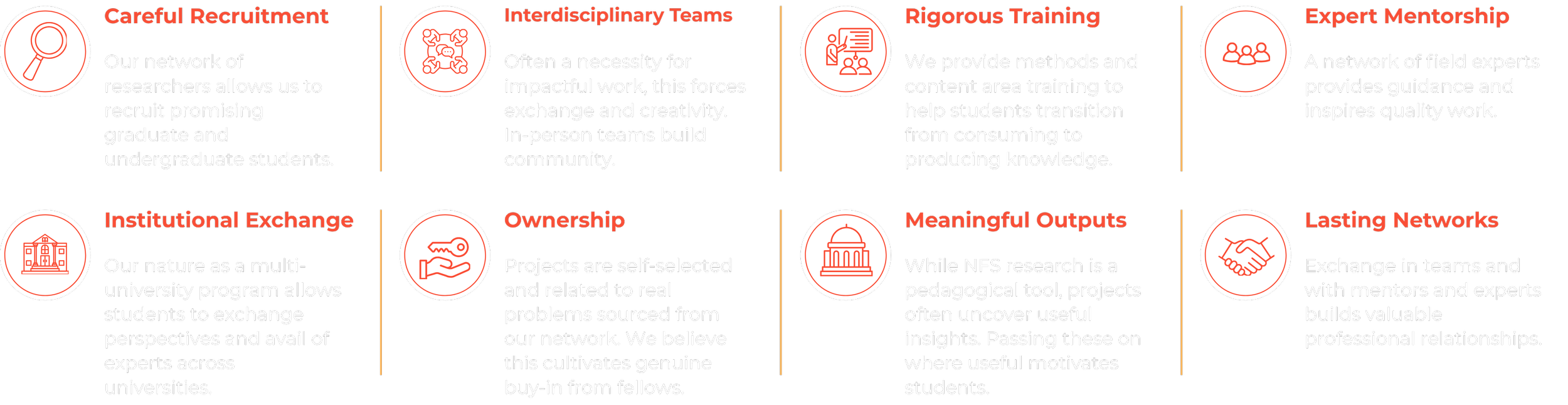
The mission of the Next Frontier Seminar is to identify a small number of exceptional undergraduate and graduate students, develop their skills through rigorous research and mentorship, and prepare them to contribute meaningfully to the challenges posed by emerging technology and international affairs. We believe careful selection of fellows, a sense of ownership, high expectations, and concentration of resources allow fellows to contribute meaningfully even at early stages in their career.
Our Theory of Change

Structure
We believe our unique structure allows us to identify and develop a small number of talented individuals and to connect them with real opportunities for impact. NFS is guided by a board of our founding membership and representatives from our partner institutions, ensuring academic excellence, facilitating exchange, and ensuring long-term commitment to our mission.
The NFS Fellowship operates as a program at the University of California Berkeley Risk and Security Lab, a leading hub for research at the intersection of technology and security. This partnership deepens our academic foundation and expands opportunities for fellows to engage with cutting edge research and real world challenges.

Our Impact
Fellows

If you are interested in supporting our mission, we encourage you to engage with NFS by submitting challenging problems for our fellows, attending events and meeting with research teams as a subject matter expert, or supporting the program so that we can continue to train the most promising students at our partner institutions - regardless of their financial means. Learn more about contributing to our mission through any of these pathways below.
Our fellows are our primary vector for impact and are at the core of what we do. Through our institutional partners and rigorous selection process, we identify a small cohort of promising undergraduate and graduate students each year and invest deeply in their intellectual and professional development through research, mentorship, workshops, and collaborative projects.
Many alumni have gone on to pursue advanced study, university research, public service, and careers in industry and policy. While their paths vary, they share a commitment to tackling complex problems at the intersection of technology and international affairs and can increasingly be found in the institutions helping shape those debates.
Research and Engagement
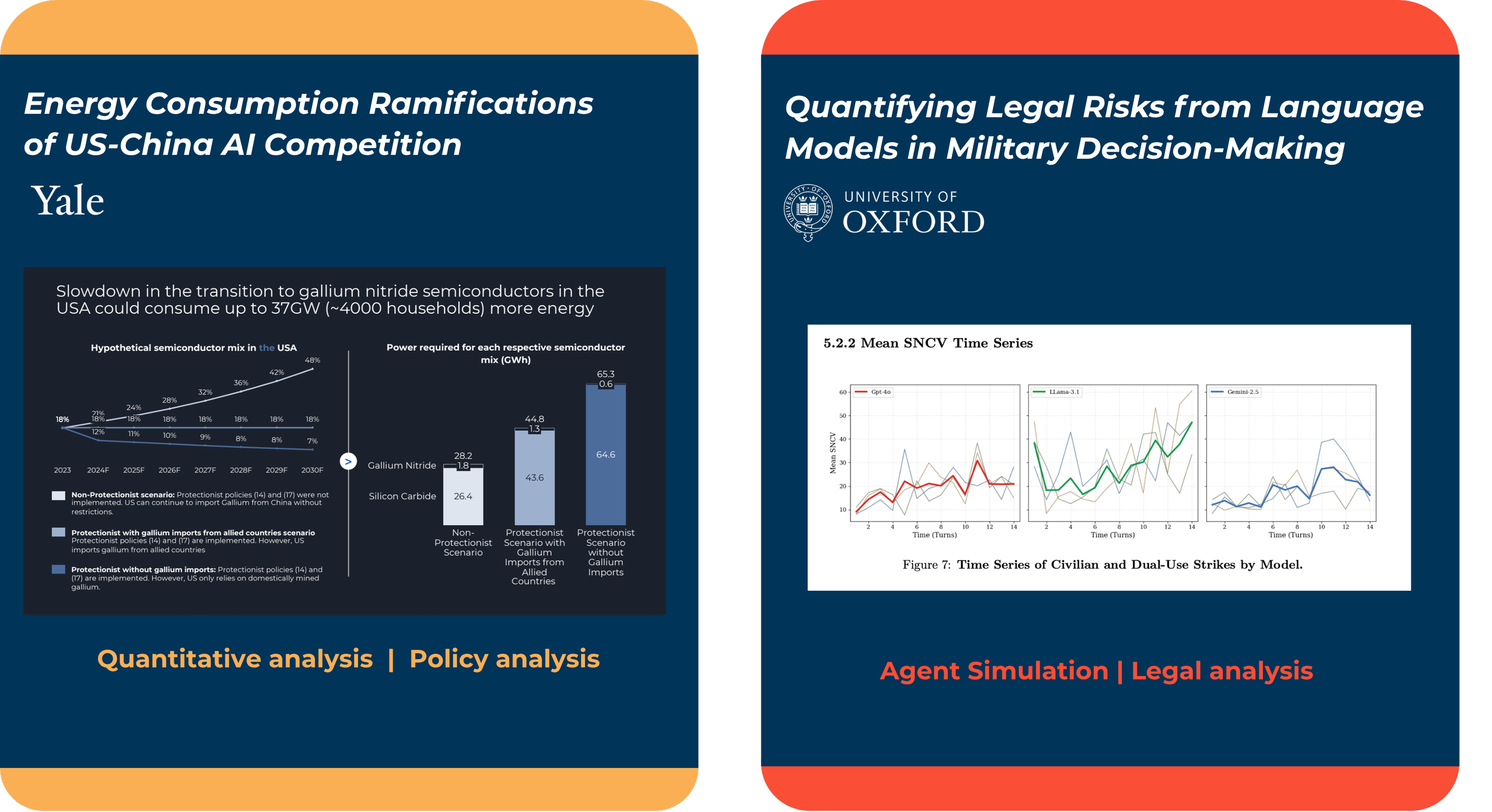
While research serves an important pedagogical role within NFS, fellows frequently produce work that contributes to ongoing academic and policy conversations. NFS projects have been published in peer-reviewed journals, presented in public forums, and briefed to senior stakeholders across government, industry, and academia. Fellows have examined topics ranging from semiconductor competition and AI governance to data localization, military decision-making, and energy security, often translating academic findings into actionable recommendations for organizations and decision-makers.
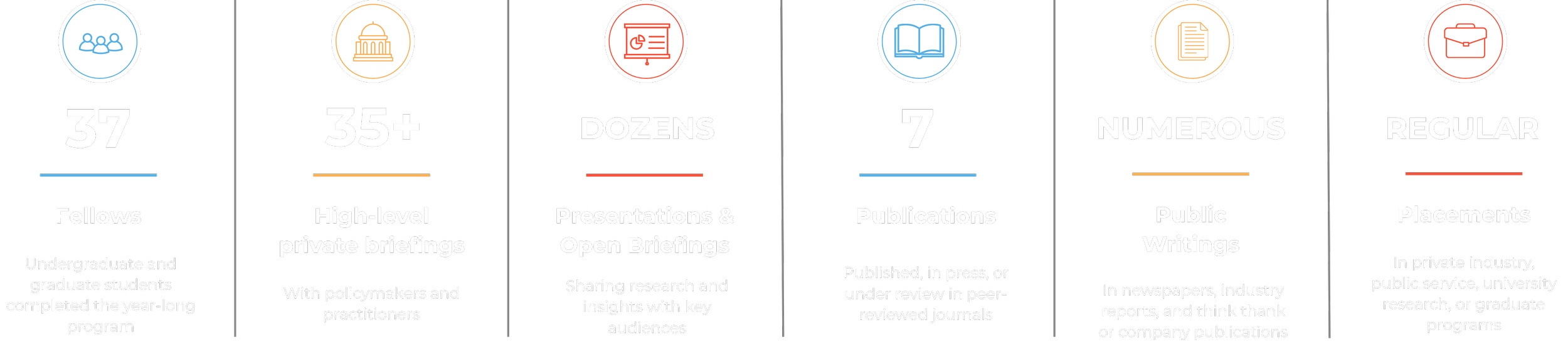
Impact By the Numbers